Walk For Our Grandchildren

Tipping Point (2013 Walk For Our Grandchildren) from Jay Mallin on Vimeo.

Featured in this video, CAAV founder Cathy Strickler participated in the 60 mile Walk For Our Grandchildren from Harpers Ferry, WV to the White House July 22- 27.

———————————————————————————————————————-

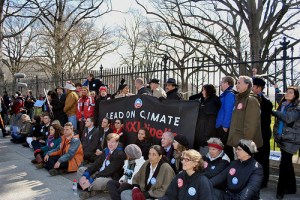
walk.2CAAV members Cathy and Charlie Strickler will be among the 100 concerned climate activists walking 60 miles from Harpers Ferry, W.V. to the White House July 22-27 “to tell President Obama and other policy makers that enough is enough. We must keep the majority of fossil fuels in the ground. We demand climate action now! ” Please consider joining them for all 6 days or any single day of the walk.

from Greg with the Walk For Our Grandchildren organizing group:

I admit it’s a bit odd. Climate change is daunting—rising temperatures, extreme weather, powerful political and economic forces which work against finding solutions—and I’m proposing to do something about this by taking a walk? It wouldn’t surprise me to have someone point and laugh, but there’s more going on with this Walk For Our Grandchildren than meets the eye.

I used to be isolated. I’d sit in front of a computer screen and read scientists’ predictions about the consequences of carbon pollution and I’d feel so low, not just because the predictions were depressing, but also because it seemed no one was paying attention. It was difficult to talk about, to be that guy who brought it up to friends and family, at work or at church. Good, otherwise emotionally healthy people have filters in place to screen the stuff that is depressing or scary, and especially if they feel like there’s nothing they can do about it, anyway. For a long time, climate change was simply getting caught in the filters.

But that’s been changing. At some point in the last few years I feel like the tiny little trickle of awareness I had about the enormity of the climate challenge became one tributary to a gathering river of people. These folks aren’t just worried or wringing their hands, either. Like any good river, they’re moving. We’re taking action. I’ve even learned how to do it myself and it’s actually not so hard. You just empty your hands, setting aside a few parts of your life for a moment to ready yourself for work that needs doing. Then you think about what you love and want to protect, you roll up your sleeves, and you wade in.

I’ll be walking on this Walk with one of the things I love, my fourteen year old daughter, Anna. She and my son, Will, are reason enough to make any sacrifice I need to make in order to know they’ll live lives safe from catastrophic climate disruption. But the reasons I’ll walk don’t end there. I’m a public school teacher who just completed his first year in the classroom. Unlike my own kids who’ve grown up with a daddy who rambles at the dinner table about Keeling curves and ocean acidification, my students are as yet largely and blissfully unaware of such things. And I don’t begrudge them that. I love it when they shyly tell me of their dreams of becoming a marine biologist, a nurse, or a chaplain. It didn’t take many days in my new job for me to realize that the least part of my calling is teaching them algebra. My real job is leaving them a world in which such dreams as they have can still come true.

Here, to me, is the meaning of this Walk:  it’s not about what will be said by us, or about us, or how someone important will pay attention and do what we ask with respect to the Keystone XL, or how our voices may get lost in the clamor of the moment. It’s that I’m marking a moment in my personal history when my intentions began to align themselves with my knowledge and my convictions. It’s about marking a larger historical moment, based not on wishful thinking but rather on mounting evidence, that a critical mass of my fellow citizens are on a similar path. Protest is a word that doesn’t even begin to capture the seriousness of my intent. I am walking because I mean to leave behind a time when I was the willing and pliant accomplice to corporate ecocide. I and those I’ll be walking with intend much more than what our sweaty, sunburned faces will suggest we’re capable of.  Using the proven power of nonviolence in action, we aim to dismantle those institutions and petty, profit-grubbing kingdoms which entertain such insanity as part of their agenda.

We’re not fools. We know it won’t happen on July 27, 2013 when we reach the White House. But our journey doesn’t end at the White House. Yet neither will it extend far into some far flung, quasi-mythical future of human perfection. Because we understand somewhat the physics of greenhouse gases on a warming planet, we also understand the rules of this game. Like the fossil fuel mega-corporations which are the principal architects of our climatic ruin, we know we’ll be going all in. Win or lose, we’ll be laying down our cards very soon. So that’s why I’m walking. I’m building the hand that we’re going to play.

———————————————————————————————————————————
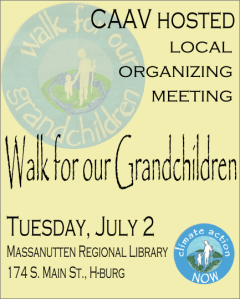
walk meetingHello All,

As climate activists, it’s easy to feel hopeless in the face of reality.  The saving grace is that we don’t know what future developments will be and how they will affect the climate crisis.  Our job is to push the public into activism, just like us.  To do that we need to increase the strength of our work.

There is a place and plan where we can do this.  You may have already heard of the Walk for Our Grandchildren that is planned for July 22nd-27th, going from Harpers Ferry to DC, 60 miles. (A small group will have already walked from Camp David to Harpers Ferry but that leg of the walk can’t easily accommodate a large number of hikers).

This event is being sponsored by CCAN and 350.org and is very well organized with lots of support built in.  CAAV thought it would be helpful to have a local meeting of those who like the idea but who are wondering if the logistics are too complicated and so might decide not to attempt it.

By getting together we can all look at the plan and see how we may want to participate and possibly team up with others for a one or more day hike.  Even one day will help swell the numbers.

Gandhi had his 240-mile salt march to the sea in 1930 for Indian independence from Britain.  This event is for energy independence from the strangle hold the fossil fuel companies have on our grandchildren.

The Walk for our Grandchildren organizational meeting will be Tuesday, July 2nd at the Massanutten Regional Library, downtown Harrisonburg at 7:00 PM.

We hope you can come.  Many of us marched in Harrisonburg when Sen. Warner was here.  Now it’s time to take all the energy we have to march to Washington, many steps in an even longer journey.

Find more details about the walk including route and registration information here.

Following the meeting, please join us as we cross the street to watch a 16 minute segment of the movie A Fierce Green Fire: The Battle for a Living Planet at Clementine’s Ruby’s Lounge. We look forward to finding some inspiration in this short review of the climate change movement and how far it has come.

With gratitude,

Legislative and Elections Committee

CAAV
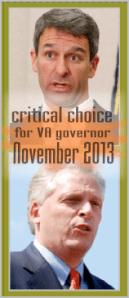
Meet Gubernatorial Candidate Ken Cuccinelli, Virginia’s Todd Akin

critical choiceby Josh Israel, Thinkprogress.org December 3, 2012

Virginia’s Republican Party appears poised to nominate state Attorney General Ken Cuccinelli to be its candidate for governor in 2013 — embracing a man whose extreme political views bear striking resemblance to those of unsuccessful 2012 Senate candidate Rep. Todd Akin (R-MO).

With his fervent anti-science, anti-choice, and anti-LGBT, anti-federal government activism, Akin’s extreme positions were well known long before his infamous August pronouncement that victims of “legitimate rape” are unlikely to become pregnant helped derail his 2012 U.S. Senate campaign. Cuccinelli’s views closely mirror Akin’s in all of those areas.

Over seven-and-a-half years as a Virginia state senator and three years as the commonwealth’s attorney general, Republican Ken Cuccinelli II has been, in the words of the Washington Post’s editorial board, “the most overtly partisan attorney general in Virginia’s history.” Though he claims he is “best known for his efforts to preserve liberty and defend the US Constitution,” it is his opposition to liberty for women and LGBT Americans and his frequent court losses based on his flawed constitutional theories that have defined his political career to date.

While perhaps not as careless as Akin with his rhetoric, Cuccinelli has embraced many of the same extreme positions:

3. He is a climate-change denier. As part of his efforts to cast doubt on climate-change science, he used his position to launch an inquisition against a former University of Virginia climate scientist. Citing possible “fraud against taxpayers,” Cuccinelli demanded the university provide him with a wide range of records relating Dr. Michael E. Mann’s grant applications. A circuit judge and then the Virginia Supreme Court ruled that the Attorney General was incorrect in believing he had the legal authority to undertake such a fishing expedition. He blasted the ruling, newspapers blasted him for wasting Virginia tax dollars. He also failed in his federal lawsuit challenging the Environmental Protection Agency’s power to regulate carbon dioxide as a greenhouse gas — a unanimous appeals court upheld the agency’s regulations as based on an “unambiguously correct” reading of the law. Since his legal efforts for climate-change denial failed, he often relies on mockery, asking audiences to exhale carbon dioxide in unison, during his speeches, to annoy the EPA. …

Please find Josh Israel’s entire piece here:

via Meet Gubernatorial Candidate Ken Cuccinelli, Virginia’s Todd Akin.


Request for Original Art Reflecting Climate Chaos

photo by Jason Lenhart/ DN-R

Candace Sipos covered Art <=> Climate Chaos: the Artist’s Response for the Daily-News Record on November 7, 2013, here: DNRonline _ Climate Chaos.

_________________________________________________________________________

Mail Art
John Bell’s “Shadow of Doubt”, Mail Art, and Joni Grady’s “UK Meteorological Office Calls Emergency Meeting”
Feather in His Cap
Janet Lee Wright’s “Feather in His Cap”

Ralph Bolgiano stands in front of the electric boxes on his house that connect 17 rooftop solar panels to the grid. He and his wife, Chris Bolgiano, local environmentalist and self-proclaimed “Mildly Amusing Nature Writer,” went 100% solar in 2008. Nine sealed lead acid batteries in the basement provide power when the grid goes down. (Go solar!) (The title refers to both a literal and figurative description.) – Janet Lee Wright

little log
Bonnie Stutzman’s “Unbuttonwood”, along with pieces by Jordan Kennedy, Lynda Bostrom, and Les Grady
Les Grady's fused glass "Atmosphere"
Les Grady’s fused glass “Atmosphere”

This piece was patterned after a NASA image of sunset over Earth taken from the International Space Station in 2008 (http://fettss.arc.nasa.gov/collection/details/earth-atmosphere/).

Earth’s atmosphere is seen against the cold, dark void of space. The lower, lighter layer is the troposphere, where we live. It is 10 miles high and is where the greenhouse lies that regulates Earth’s temperature. Without that greenhouse, the average temperature on Earth would be 0°F, hardly a welcoming place for life. Because water vapor is responsible for about half of the greenhouse effect, carbon dioxide plays a critical role by regulating the amount of water vapor in the atmosphere, thereby preventing the greenhouse from collapsing. However, as the carbon dioxide concentrations in the atmosphere increases, the greenhouse effect becomes stronger and Earth gets warmer.

The motivation for this piece was to remind us just how thin our atmosphere is.  We truly live in a tiny bubble that protects us from space. As we emit more and more carbon dioxide into the atmosphere we run the risk of raising Earth’s temperature above the optimal zone in which civilization developed.  I hope all viewing this piece will realize just how fragile our home on earth is. – Les Grady

______________________________________________________________________

Thanks to everyone who submitted artwork!

Come to the opening at Ruby’s on Friday, November 1 from 4-6 PM!

_________________________________________________________________________

call for entriesDriven by man’s overuse of fossil fuels, the world’s climate is changing in many ways.  When you as an artist read about floods, drought, huge wildfires, record-breaking heat, or ocean acidification, and see the devastation wrought on the natural world, as well as on human life, as it comes over television and the internet, how does it impact you?  Do you try to envision a better future; do you mourn what’s lost? And how do you respond through your art?

These are the two-way questions that the Climate Action Alliance of the Valley is asking you to address in your entries for                 ART ↔ CLIMATE CHAOS                            – an art exhibit at Clementine Café‘s downstairs Ruby’s Lounge for the month of November 2013.  Personal reactions to the threat of climate chaos are often emotional, and are an essential component of what we learn and wish to pass on to others. Art can convey our emotional responses to this crisis, and we invite you to submit your original work to provoke the viewer as well and raise awareness.

All entries are welcome, but space is limited. CAAV Show organizers will accept up to 30 entries depending on the size of the works. Art pieces should be able to hang flat against the wall.

To enter a piece for Art ↔ Climate Chaos:

1. Submit up to three pictures of your original art work, its dimensions, and your contact information by October 10th to:

  • Lynn Smith ( if you have a Mac computer) at tracksmith[at]aol.com,
  • Joni Grady at jonigrad[at]shentel.net or
  • Cathy Strickler at 1225 Hillcrest Dr., Harrisonburg, VA 22801.

2. If your work is accepted you will be notified by October 17th.

3.  All artwork must be ready to hang from wire or other something similar: all photographs and drawings must be matted and framed and have a hanging system attached; paintings on stretched canvas or other medium should have wire or other hanging system attached.

4. Deliver your art to the home of:                                                                                      Cathy and Charlie Strickler                                                                                               1225 Hillcrest Dr., Harrisonburg, VA 22801                                                                  between Thursday, October 24 and Sunday, October 27.

Include with your artwork:

  • Your signed Liability Waiver below – (click for stand alone page to print)
  • A label attached to the work which includes:
    • your name
    • the title of the piece,
    • the medium used, and
    • the price if you intend to offer it for sale. Selling art is between you and the purchaser, so please include contact information on the label for customers’ convenience.
  • A brief statement relating your work to the theme of the show.

5. Installation of the art by CAAV and the juror will take place on Monday, October 28 from 12 noon -4 PM . It will be taken down on Monday, December 2.  You may pick up your art at Clementine between 10 AM and 12 noon on December 2, or pick it up from the Stricklers’ home after this time.

exhibit invitationOpening reception for the Show is on Friday, November 1 from 4-6 PM (please note this time change from the original 5-7 PM time). You are invited! Please invite others to attend!

If you have any questions about this Show and/or this information, please contact:

  • Lynn Smith at 540-746-8183 or tracksmith[at]aol.com or
  • Joni Grady at 864-350-8972 or jonigrad[at]shentel.net

——————————————————————————————————————-

Liability Waiver:
While Clementine does everything they can to best preserve your piece(s) and to keep guests from tampering with artwork, neither they nor the Climate Action Alliance of the Valley are responsible for theft or damage to your artwork during the month long show.  We will work to avoid this scenario and ensure all work is securely hung and lies flat on the wall.  We or Clementine will contact you immediately if any of your pieces need attention.

By signing below you agree that to this waiver of responsibility for Clementine and the Climate Action Alliance of the Valley.

Artist Name:___________________________________________
Artist Signature:________________________________________
Date Signed:__________________

__________________________________________________________________________

A printable trifold version of this information is available here (outside) and here (inside).

Check out CAAV member and passionate Mail Artist Judith Hollowood’s call for Climate Chaos mail art through her newly launched Climate Change Mail Art blog. “If you’re worried about climate change and you make mail art, this blog is for you. If you’re worried about climate change and are curious about mail art, it’s for you, too.” This is a fun way to contribute to the ART ↔ CLIMATE CHAOS  show!

Hydrofracking in the George Washington Forest

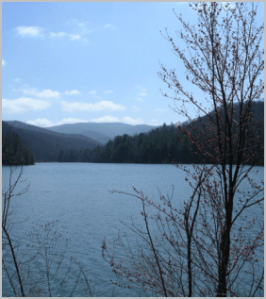
Switzer Lake
Switzer Lake, photo from Friends of Shenandoah Mountain

Our area forests are life providing reservoirs of clean water, fresh air,  biodiversity, and carbon sequestration in addition to offering managed use opportunities for timber, game, and recreation.

Newer technology is also making our forests a valuable source of natural gas from their underlying shale formations. The ability to extract this energy without tremendous ecological consequences is in question. Lynn Cameron explores these issues among others for Friends of the Shenandoah Mountain here.

Jeremiah Knupp reports on the April 24 “Fracking Travelogue” public forum here for Old South High. Candace Sipos writes about the issue for the Daily News Record here as published on May 3.

Old South High continued its coverage in Jeremiah Knupp’s entry on May 8: “In Rockingham County, the forest contains hiking and mountain biking trails, campsites and hunting land, and one of the country’s greatest areas of biodiversity. Fracking opponents note that the drilling process is a large-scale industrial operation. In addition to the five to ten acre sites required for a well, roads and other infrastructure must be built into the forest.”

Charlottesville’s The Daily Progress reports in an April 20, 2013 article by Aaron Richardson:

“The U.S. Forest Service is expected in June to end two years of wrangling over whether to ban hydraulic fracturing, or fracking, in the George Washington National Forest.

Debate has raged about the issue since 2011, when the service initially proposed a 15-year moratorium on fracking in the swath of largely undeveloped wilderness stretching down the spines of the Blue Ridge and Allegheny mountains in western Virginia.”

Laura Peters covered recent conversations about this on April 26 for the News Leader here. She writes:

“Ken Landgraf, planning staff officer for the U.S. Department of Agriculture’s Forest Service, said the decision on banning horizontal drilling or making it an option is still up in the air.

An important part of the Forest Service’s consideration, Landgraf said, will be public comment.”

Rockingham County’s Community Alliance for Preservation and the Shenandoah Valley Network are urging last minute appeals to Secretary of Agriculture Tom Vilsack and our US Senators to support the George Washington National Forest’s proposed fracking ban:

“Please contact Secretary of Agriculture Tom Vilsack at agsec@usda.gov, who oversees the US Forest Service, and ask him to support the GWNF’s proposed fracking ban. It’s our last best chance to make sure the sensible horizontal drilling ban stays in the final forest plan, coming out soon. It’s not too late for the Forest Service to make the right decision.

After you email Secretary Vilsack at agsec@usda.gov, please contact our US Senators with the same message.”

The Virginia Sierra Club is also supporting the ban. They offer easy online messaging to our representatives here.

And from the Don’t Frack George Washington National Forest facebook page:

Here are the contact details for commenting on the GWNF management plan. Official comment period is closed but you can still send comments to show support for continuing to keep GWNF off-limits to fracking and other industrial activities.

Submitting Comments
If you wish to submit a comment, please send it to:

Karen Overcash                                                                                                                5162 Valleypointe Parkway , Roanoke, VA, 24019                                  kovercash@fs.fed.us

Harrisonburg Energy Efficiency Improvement Opportunity

footprints on courthouse

From Councilmember Kai Degner regarding the May 14, 2013 council vote on funding city building energy efficiency:

Hi-

Thank you for your support in the last months for the performance contract for the Public Safety Building.  Your advocacy, along with others, produced a 3-2 vote on Tuesday night FOR performance contracting on the Public Safety Building AND smaller investments in a few other buildings.

You can see the discussion at the City Council meeting at this link: http://harrisonburg-va.granicus.com/MediaPlayer.php?view_id=4&clip_id=118&meta_id=6466

My personal preference was to assign the contract directly to ABM as they have twice been selected by CIty staff to provide the best value to the City; however, it became evident to me in the discussion that I may not get the third vote on a motion identifying ABM as the contractor.  So, the specific motion approved 3-2 directs the City Manager to pursue performance contracting and report back by the end of July about how to make that happen, including giving performance contractors additional to ABM a chance to bid on the project.

Please also note in the discussion (video) that Mayor Byrd, who did not support the motion, did suggest that council could create broad energy savings goals, and hold staff accountable to meeting them.  This approach, I believe, is possible strategy to adopt in pursuit of having the city pursue energy and other sustainability goals.

This is a major step forward in making this project happen, and I believe the project would not have received these three votes without your advocacy.  I hope this is encouraging and motivating for all of us to continue this work.

Thank you-   Kai

_____________________________________________________________

An energy efficiency proposal for Harrisonburg’s Public Safety Building (see Councilmember Kai Degner’s description below) elicited considerable public comment during the April 23, 2013 council meeting. The Council scheduled a work session to address concerns on Wednesday, May 1 from 4-7 at the Council Chambers. The public was welcome to attend but not offered input during the session.

According to this May 2, 2013 Daily News Record account by Preston Knight: “At the behest of Harrisonburg residents who spoke in favor of energy improvements during a recent public hearing, council discussed energy savings in its buildings.

But the main target for savings — the Public Safety Building on North Main Street — is a freestanding project outside the normal budgeting process, officials say.

That resulted in no changes to the budget proposal during Wednesday’s work session, at least not from sustainability efforts.”

The budget will come to a vote at the May 14 council meeting before which voters continue to have an opportunity to contact their council members and city manager asking that sustainability measures for the city be funded.

Local attorney and energy efficiency advocate Tom Domonoske offers this strategy:

“If 100 people contact the City Council and ask for energy efficiency modifications to public buildings and a sustainability coordinator position to be put in the budget, then the Council will have a hard time not doing so.  The next meeting is May 14 where the council will vote on the budget.

The emails can go to ‘Kurt.Hodgen@harrisonburgva.gov‘; ‘Ted.Byrd@harrisonburgva.gov‘; ‘Charlie.Chenault@harrisonburgva.gov‘; ‘Richard.Baugh@harrisonburgva.gov‘; ‘Kai.Degner@harrisonburgva.gov‘; ‘Abe.Shearer@harrisonburgva.gov

Letters can be sent to:  City Manager’s Office, Room 201, 345 South Main St., Harrisonburg, VA 22801, with a request to forward them to City Council.  Telephone calls can be made to the same office at 540-432-7701.  Faxes can be sent to 540-432-7778.

The message should be: ‘ I am a city resident, and I ask the City Council to fund energy-efficiency renovations to our buildings. and to create a city staff position to develop energy reduction, energy efficiency, and sustainability practices.’ ”

See Tom’s letter to the council and City Manager Kurt Hodgen regarding the “2014 Budget, Energy Efficiency, and Sustainability Coordinator” here.

Please read the HR Green Network and Climate Action Alliance of the Valley’s letter to the council and city manager in support of energy efficiency and a sustainability coordinator by clicking here.

——————————————————

Austin, TX was able to prevent having to build a new power plant by conducting comprehensive building energy efficiency improvements. See Conservation Power Plant from the film Kilowatt Ours.

Here in Harrisonburg we have an opportunity to improve the energy usage of some of our public buildings thereby reducing our carbon footprint and saving money.

A proposal to improve the energy use of the Public Safety Building is part of the 2014 budget.  The Tuesday, April 23 council meeting included a public hearing on the budget. Councilmember Kai Degner is supporting the energy efficiency measure for public buildings. Here were his comments on the issue before the April 23 meeting:

I need your help to help save half a million Harrisonburg tax payer dollars from being wasted in inefficient buildings this year.  There are doubts that enough Harrisonburg residents would prioritize this project, so it may not happen.

Please read below and plan to attend the April 23rd (Tuesday) City Council meeting at 7PM.  Join the public comment session to express your opinion (either way).

To learn more, I’ll be at the Artful Dodger at 8pm this Wednesday(4/17) and Thursday(4/18), and at 1pm on Sunday (4/21).

Hi everyone,

The City Council has an opportunity to redirect $100,000+ from annual unnecessary utility costs towards energy efficiency upgrades in the City’s Public Safety Building.  The City School Board has their own opportunity to redirect $400,000 of unnecessary utility costs towards energy efficiency upgrades using the same “Performance Contracting” concept.

The City of Harrisonburg and Harrisonburg City Schools have contracted with an Energy Services Company (ESCO) to study and implement energy- and water-saving facility upgrades using a “Performance Contracting” approach.  Performance contracts are 100% self-funding and are completed within existing budgets – without raising taxes.  Basically, borrow money to fix the worst efficiency problems out there, save money on utility costs, and use the annual savings to repay the loan over time.  By using the State of Virginia’s Performance Contracting Process, savings are guaranteed for up to 20 years.  Savings are measured annually, and, if they fall short, the contractor pays the difference.

Based on the study of Harrisonburg’s buildings and infrastructure, major reductions in the City’s operating costs and carbon footprint can be achieved in the Public Safety Building by replacing obsolete and end-of-life equipment, tuning up buildings, training occupants and staff, engaging students with energy awareness curriculum, and diligently tracking the energy usage over time.

The costs of these efficiency-related activities in the Public Safety Building is about $2 Million.  That sounds crazy expensive, maybe, until you figure we spent $189,000 last year on utility costs for this SINGLE building, and we will again next year if nothing changes.  Instead, we could use about $110,000 of those costs to repay a loan to make the improvements.

Over 15 years, the City’s savings in utility and operating costs would be $3 Million (factoring in that electric costs increase modestly every year). Incidentally, the school’s proposed costs would be a seemingly-whopping $6.5 Million – but they stand to save $8 Million over 15 years.

For those concerned with carbon: together, the annual CO2 reduction is 3,745 Metric Tons (equivalent to electricity for 561 homes every year for 15 years or equivalent to taking 700+ cars off the road for a year every year for 15 years).

For those concerned with economic development: we are trying to designate Harrisonburg as an “innovative” community.  What’s innovative about blowing half a million tax dollars out of inefficient buildings?  Let’s instead redirect this tax payer money into sensible infrastructure improvements.

For those concerned about politics: performance contracting is supported by the Republican-controlled Virginia government, and has been supported by both Democratic and Republican governors.

Harrisonburg utilized this process in 2009 to reduce energy consumption at the Community Activity Center at Westover Park (some of you might remember this success story presented immediately after we approved $1 Million for bicycle infrastructure this past Fall).  It worked, even better than predicted.

I believe we should do it again, but I don’t think there is enough public support to guarantee it will happen.

Will you attend Tuesday’s Council meeting and speak in support of the Performance Contracting for the Public Safety Building?  Your attendance at the meeting and other communications (or lack thereof) can help influence this decision.

I’ll be at the Artful Dodger 8pm this Wednesday and Thursday and at 1pm on Sunday (April 17, 18, 21) if you want to learn more.

Thank you for all you do to make Harrisonburg a great place to live.

Kai
Harrisonburg City Councilmember

Here are some links to performance contracting about the Performance Contracting process:

350.org Premieres “Do The Math” Film on Earth Night

Do The Math film trailer
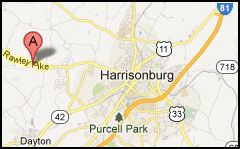
Join us for a Sunday, April 21, 7pm free showing of this film at the Harrisonburg Unitarian Universalist Building, 4101 Rawley Pike. Light refreshments available at 6:30.

On Sunday, April 21st — what they’re calling “Earth Night” — 350.org will premiere a film about their work and growing movement.

Featuring and named after the big tour 350.org conducted across the country last fall, Do the Math is a 42-minute documentary about the rising movement to change the terrifying math of the climate crisis and challenge the fossil fuel industry … an inspiring, beautiful, and fast-paced story that shows the power of the growing climate movement.

On the night of April 21st, people will gather in hundreds of living rooms and libraries across the country for the premiere of the movie.

Be in that number here in Harrisonburg, Sunday, April 21, 7PM!

In the Unitarian Universalist Building, 4101 Rawley Pike, Harrisonburg

Meet and join other interested people to find out the facts that will answer your questions and support your thinking into action! Our numbers are growing and we want you to be a part of our movement. Come at 6:30 for a social with light snacks.  Do the Math screening is at 7 PM. At 8 PM there will be a 30 minute live streaming panel of climate experts from New York City. Together we find strength and comfort and build trust. FREE

location of HUU
click on the image to find directions with Google maps

April 21st is one day before the end of the State Department’s public comment period on the Keystone XL pipeline — comments will be collected and submitted.

Courageous Leadership: Civil Disobedience and Climate Disruption

tar sands action 2013
photo by Chesapeake Climate Action Network

A community forum preceding the screening of Bidder 70 at CST on Earth Day

Who: Sponsored by the Virginia Sierra Club’s Shenandoah group, the Climate Action Alliance of the Valley, and iMatter: Kids vs Global Warming.  Special guest speaker will be Allison Chin, President of the Board of the National Sierra Club.

What: A panel discussion held in conjunction with the showing of Bidder 70.  The film follows Tim DeChristopher, a University of Utah student, who on December 19, 2008, in a dazzling act of civil disobedience, derailed the outgoing Bush administration’s illegal Bureau of Land Management oil and gas auction.  The panel will address the history of civil disobedience in the United States in general, and the reasons for its recent adoption by protestors against the forces behind global warming, particularly the Keystone XL pipeline carrying tar sands crude oil and mountain top removal coal mining.

When: Before the 9:00 PM showing of Bidder 70:  7:30 – 8:40 PM
Introductions by moderator, Les Grady
7:35-7:55 PM Allison Chin, President of the Board of Directors of Sierra Club
7:55-8:00 PM  iMatter youth climate activist Grant Serrels
8:00-8:10 climate and mountain top removal activist Lara Mack
8:10-8:40 Q&A, moderated by Les Grady, Chairman of Climate Action Alliance of the Valley
8:40-9:00 Break and networking.

Where: Court Square Theater, 61 Graham St., Harrisonburg

Cost: Included with $6.00 admission to film showing

Why:  After endless and unsuccessful lobbying, demonstrations, and marches, many climate activists have begun to wonder if civil disobedience is the only way to get the attention of legislators and a public too distracted by other matters both large and small and reluctant to make necessary changes. In the long list of historic reasons for civil disobedience in the US, which range from an unjust tax on tea to slavery and Jim Crow laws, civilization-killing climate change looms larger than all the rest.  The stakes are too high and the time for action too short.

Questions?  Contacts:    Ralph Grove, Sierra Club, 540-433-1323
Joni Grady, CAAV, 540-209-9198
Cathy Strickler, CAAV, 540-434-8690
Valerie Serrels, iMatter,  540-405-9201

Find this event on facebook here.

The Daily News Record’s Candace Sipos reported on this forum in an April 26, 2013 article: Environmental Panel Discusses Civil Disobedience, JMU Alumna One of 12 Arrested in Protest  A DNR subscription is necessary to view this article.


Downtown Harrisonburg Rally against the Keystone Pipeline

CAAV collaborated with 350.org, the Chesapeake Climate Action Network, Kids vs. Global Warming/ iMatter Campaign and other local groups to stage a public rally around Senator Warner’s visit to Harrisonburg on Wednesday, March 27. WHSV rally video

On March 22, 62 Senators, including Virginia’s Mark Warner, voted for a resolution supporting construction of the Keystone XL tar sands pipeline.

Sen. Warner chose to stand with the oil industry, rather than the thousands of Virginians that have worked so hard to stop this project. In CAAV chairperson Les Grady’s words, we urge Sen. Warner to: “Please think again about your decision and help us work to reduce CO2 emissions before we condemn our children and grandchildren to a much less hospitable world.”

The Daily News Record‘s Alex Rohr covered the downtown march and meeting with Warner’s chief of staff Luke Albee:

Time Is Melting Away

Pipeline Protesters Crash Visitor’s Party To ‘Hold Him Accountable’

Daily News Record   Posted: March 28, 2013

By ALEX ROHR

Sen. Mark Warner, D-Va., discusses environmental matters with protesters along Harrisonburg’s Main Street on Wednesday. The protest focused on the Keystone XL pipeline, but the 70 or so people who rallied during Warner’s visit to the Friendly City regarded it as just the centerpiece for broader environmental concerns. (Photos by Jason Lenhart / DN-R)

HARRISONBURG — A long row of signs, banners, flags and hand-held windmills wound around in circles on Main Street Wednesday afternoon, waving to get the attention of U.S. Sen. Mark Warner, D-Va., who was meeting with entrepreneurs in downtown Harrisonburg.

“We’re here today to make sure that we can reach Warner and hold him accountable for his actions supporting the pipeline,” said Emily Heffling, Virginia campus organizer for the Chesapeake Climate Action Network.

By actions, Heffling meant Warner’s vote on a nonbinding budget amendment made by the Senate on Friday expressing support for the Keystone XL pipeline. The resolution passed easily on a 62-37 vote.

The proposed $5.3 billion pipeline would carry tar sands oil from Alberta, Canada, through America’s heartland to refineries in the Gulf of Mexico.

“Hey, Senator Warner, the planet’s getting warmer,” the protesters chanted as they marched, one dressed in a polar bear costume with a sign that read “Time is melting away.”

When a coalition of 22 Virginia residents visited Warner’s office to lobby against the pipeline before the vote, they were told they’d receive a response within a week, said Heffling and Kara Dodson of 350.org.

This statement was not confirmed with Warner’s representatives.

“He didn’t [respond] …  so we’re back,” Heffling said. “And we’ll keep coming back until he rejects the pipeline.”

And they came back with muscle.

Environmental protesters prepare to march along Main Street as they make their statement about Sen. Mark Warner’s support of the Keystone XL pipeline project. Warner, D-Va., was in Harrisonburg for an entrepreneurs’ roundtable.

“The Keystone pipeline’s got to go. Hey, hey, ho, ho,” the chanting continued.

About 70 protesters, including members of climate action groups Climate Action Alliance of the Valley, the Shenandoah Group of the Sierra Club, 350.org and Kids vs. Global Warming/iMatter Campaign, didn’t leave until they got a response from their senator.

When Warner pulled up in front of Ruby’s, the basement lounge below Clementine Restaurant on South Main Street, he talked with marchers for a few moments before going to the scheduled business roundtable with local entrepreneurs.

Warner said he voted for the amendment because of the results of an updated U.S. State Department environmental impact statement, which concluded the pipeline’s effect would be minimal because the oil sands would be developed with or without Keystone.

President Barack Obama denied a permit for  the pipeline’s construction in  January 2012, citing environmental concerns over the pipeline’s proposed route. He did sign an executive order allowing the southern portion of the pipe from Oklahoma to the Texas Gulf Coast to be built.

While Warner didn’t stay long to chat, he sent his chief of staff, Luke Albee, to talk with the protesters across the street at Massanutten Regional Library.

“I am your response,” said Albee, who listened to the concerns of a room filled with residents of Harrisonburg, Broadway, Mount Crawford, Penn Laird, Dayton, Grottoes, Bridgewater, Keezletown, Charlottesville and Richmond.

At their own roundtable discussion, albeit last-minute, protesters said their march was not just about this particular stretch of proposed oil pipeline, but about switching to sustainable forms of energy, including wind and solar.

“The Keystone XL pipeline is important for what it is and what it represents,” said Les Grady, part of the Climate Action Alliance of the Valley’s organizing body. “We are so addicted to fossil fuels that there are no limits to where we will go in getting them.”

Grady explained that the tar sands oil is particularly unfriendly to the environment because of the energy required to make it usable.

One concern that protesters practically shouted at Albee was their accusation that the State Department study was performed by a business with financial ties to TransCanada, the company wanting to build the pipeline.

“It’s like the fox guarding the henhouse,” said Herbet Fitzel of Chester, who came to Harrisonburg as a volunteer with 350.org.

In the wake of widespread social media protests against the pipeline, some people at Wednesday’s march said it was important to show up physically.

“Anybody can push a button,” said Annie Long who works at Little Grill. “I wanted to be in a physical body here.”

“You elect people and if you don’t push what you elected them for, then they have their own agenda,” said Elise Benusa, a JMU senior in the international studies program. “You can’t just sit back, complain about it, and not get your hands dirty.”

Contact Alex Rohr at 574-6293 or arohr@dnronline.com

View rally photos by CAAV steering committee member Pete Mahoney in this Picasa web album.

Warner Rally, March 27, 2013

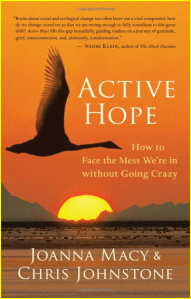
“Active Hope” by Joanna Macy & Chris Johnstone

Active Hope

Book Review By Frederic and Mary Ann Brussat

from Spirituality and Practice, Resources for Spiritual Journeys

Active Hope
How to Face the Mess We’re in without Going Crazy
Joanna Macy, Chris Johnstone
New World Library 03/12 Paperback $14.95
ISBN: 9781577319726

Joanna Macy, author and activist for peace and deep ecology, and Chris Johnstone, who trains and writes on resilience and positive change, know that we are living in hard and perilous times. They write about three stories that are afoot in our culture that address our situation. The first is “Business As Usual” with its emphasis on economic growth, consumption, getting ahead, and using nature as nothing more than a commodity. The second story is “The Great Unraveling” which focuses on economic decline, resource depletion, climate change, social division and war, and mass extinction of species. The third story is “The Great Turning” which involves campaigns in defense of the earth; a change in our perception, thinking, and values; and developing new economic and social structures.

To choose the third story is to live in active hope. This practice has three steps: taking a clear view of reality, seeing the direction we’d like things to move in, and taking concrete steps to change things. Macy and Johnstone envision gratitude as a practice that animates us to act for our world. They also believe that it serves as an antidote to consumerism.

The planetary emergency often promotes such a feeling of pain that we are immobilized or sidetracked to trivial pursuits. The authors present practices and exercises to help us honor our pain for the world. Active hope also provides us with a wider sense of self and the desire to connect with like-minded souls.

It is hard to cope with feelings of powerlessness in the face of so many global problems. But we can derive new strength by relying on a wider view of community, a larger view of time, catching an inspiring vision, and daring to believe it is possible. We can stem the tide of catastrophe by building support for ourselves, maintaining energy and enthusiasm, and accepting uncertainty (we really don’t know how things will turn out).

Active Hope is the right book for our time!

Kim Stanley Robinson’s Trilogy

Forty Signs of RainForty Days of Rain, Fifty Degrees Below and Sixty Days and Counting

by Kim Stanley Robinson

From a wired.com interview with the author by Brandon Keim on 7/03/07:

WN: One of the main characters in the new trilogy is Frank Vanderwal, a scientist who leads a radical National Science Foundation initiative to respond, immediately and on a planetary scale, to climate change. Vanderwal becomes heavily influenced by Buddhist thought, and his own lifestyle becomes a form of Freganism — living without a single permanent home, communing in a deeply spiritual way with nature, accepting change and valorizing adaptability, living off the excess of our own over-producing society. Do you feel this to be the ideal mentality and lifestyle for a time of radical climate change?

Robinson: He’s a character in a comedy who takes things too far. A lot of scientists act on their beliefs and so do things that look crazy to the rest of us. He’s basically following the right line — but without going homeless or moving into a treehouse, all of us can look at the way we live and adjust accordingly. That’s what novels are for in the utopian sense: to suggest modes of thought so you can examine your own life and see what you can do.

read the rest here